
Rewiring isn't one job — it's four. A panel swap, a service upgrade, a partial rewire, or a whole-house rewire. Knowing which one you actually need is most of the budget conversation.
You don't always get to pick. Old wiring, a 60-amp panel, or renovating enough rooms can turn what looked like a partial job into a full-rewire conversation once the inspection happens. Plug your house through the electrical rewire cost calculator before you start collecting quotes.
How to plan a house rewire without guessing the scope
Rewiring a house is dangerous work and usually belongs with a licensed electrician. This is not a homeowner how-to. Work usually starts with a permit and a scope decision. A rough-in inspection almost always needs to be done before anything is covered back up.
- Identify the wiring era. Check the panel, accessible basement or attic runs, and a sample device box. Knob-and-tube, aluminum branch, cloth NM, and modern NM all point to different scopes.
- Decide full vs partial with an electrician before bids. A kitchen-only job can widen once AFCI/GFCI rules, old branch wiring, or panel capacity enter the conversation.
- Pull the electrical permit. The permit defines what the inspector expects to see at rough and final. For rentals, flips, and most investor work, assume a licensed electrician is required.
- Open access, then have the electrician rough in circuits. Open walls are cheap. Finished plaster is slow. This access step is why the same electrical scope can swing by thousands of dollars.
- Pass rough inspection before patching. Wire gauge, box fill, staple spacing, grounding, AFCI/GFCI, and panel working clearance get checked before drywall or plaster closes the work.
- Finish devices, label the panel, and pass final. Outlets, switches, breakers, fixtures, cover plates, tester checks, and panel labels finish the job. The final inspection is the paper trail your buyer, insurer, or lender may ask for later.
The four jobs people call a rewire
“Rewire” is a catch-all that quietly covers four different jobs. They land at four different prices, ask different questions of the inspector, and disrupt the house in different ways. Get the category right before you take a quote.
| Job | What changes | What stays | When it fits | What to ask |
|---|---|---|---|---|
| Panel swap | Main panel + breakers | Branch wiring to outlets and lights | Failing or recalled panel (Federal Pacific, Zinsco, old fuse box) on otherwise sound wiring | Will any existing circuits need arc-fault or GFCI breakers at the new panel? |
| Service upgrade | Service entrance conductors + meter base + main panel (100A → 200A), coordinated with utility disconnect/reconnect | Branch circuits | Adding an EV charger, heat pump, electric range, or a large addition load | Who coordinates with the utility, and what's the calendar window for the meter cut-in? |
| Partial rewire | Branch wiring in specific rooms or wings | Rest of the house, plus (usually) the panel and service | One-room or wing renovation, when the rest of the wiring is recent NM cable | Will the renovated rooms trigger arc-fault upgrades on circuits in other rooms? |
| Full rewire | All branch circuits + panel + (often) service entrance | Finishes only if walls stay closed, which they rarely do | Knob-and-tube present; aluminum branch where an accepted repair path is unavailable; 60A panel with old branch wiring behind it; or three-plus rooms in heavy renovation | Is patch and paint of opened walls in your quote, or in mine? |
Cost ranges in this guide are planning ranges, not contractor bids — anchored to manufacturer spec sheets (Square D, Eaton, GE, Siemens, Leviton) and cost-guide bands from Fixr, Inch Calculator, Homewyse, and Nassau National Cable. Always verify against a local electrician quote before you sign.
The access ladder — why open walls cost less than finished walls
The dollar number on a rewire tracks how easy it is to reach a wire, not just how many feet of wire you're replacing. The same circuit count can swing 2-3× across a house depending on what an electrician can actually get to. Top of the ladder is cheapest; each rung downward adds labor and patch.
- 1
Open studs / gutted room
- What the electrician reaches
- Every cavity. Electrician walks the wire, staples to studs, done.
- Patch & paint after
- None — framers and drywall are already in the renovation plan.
- Cost effect
- Cheapest case. Often $2-4/sqft of rewired area on a mid-size project.
- 2
Unfinished basement + accessible attic
- What the electrician reaches
- Most circuits run from below or above. A few fish-throughs into wall cavities.
- Patch & paint after
- Modest. A handful of small access cuts and ceiling patches.
- Cost effect
- Near the bottom of the band on 1950-plus stock with NM cable.
- 3
Finished drywall, post-1960 framing
- What the electrician reaches
- Wires fished through stud bays from outlet to outlet. Selective wall cuts.
- Patch & paint after
- Light drywall patch and paint downstream. Real money, but predictable.
- Cost effect
- Middle of the band — typically $4-6/sqft of rewired area.
- 4
Lath-and-plaster, pre-1950
- What the electrician reaches
- Every wire is a fish-and-patch event. Plaster cracks once you cut into it.
- Patch & paint after
- Plaster-grade, not drywall patch. Slower trade, higher rate.
- Cost effect
- Top of the band — $6-10/sqft of rewired area on heavily-rewired pre-war stock.
- 5
Occupied home with furniture and finished living
- What the electrician reaches
- Same as the wall type above, but with daily setup and breakdown.
- Patch & paint after
- Plus dust protection, work zones, and partial power restored each evening.
- Cost effect
- A 15-30% premium over the otherwise-equivalent finished-walls number.
How a real Chicago-metro rewire actually went
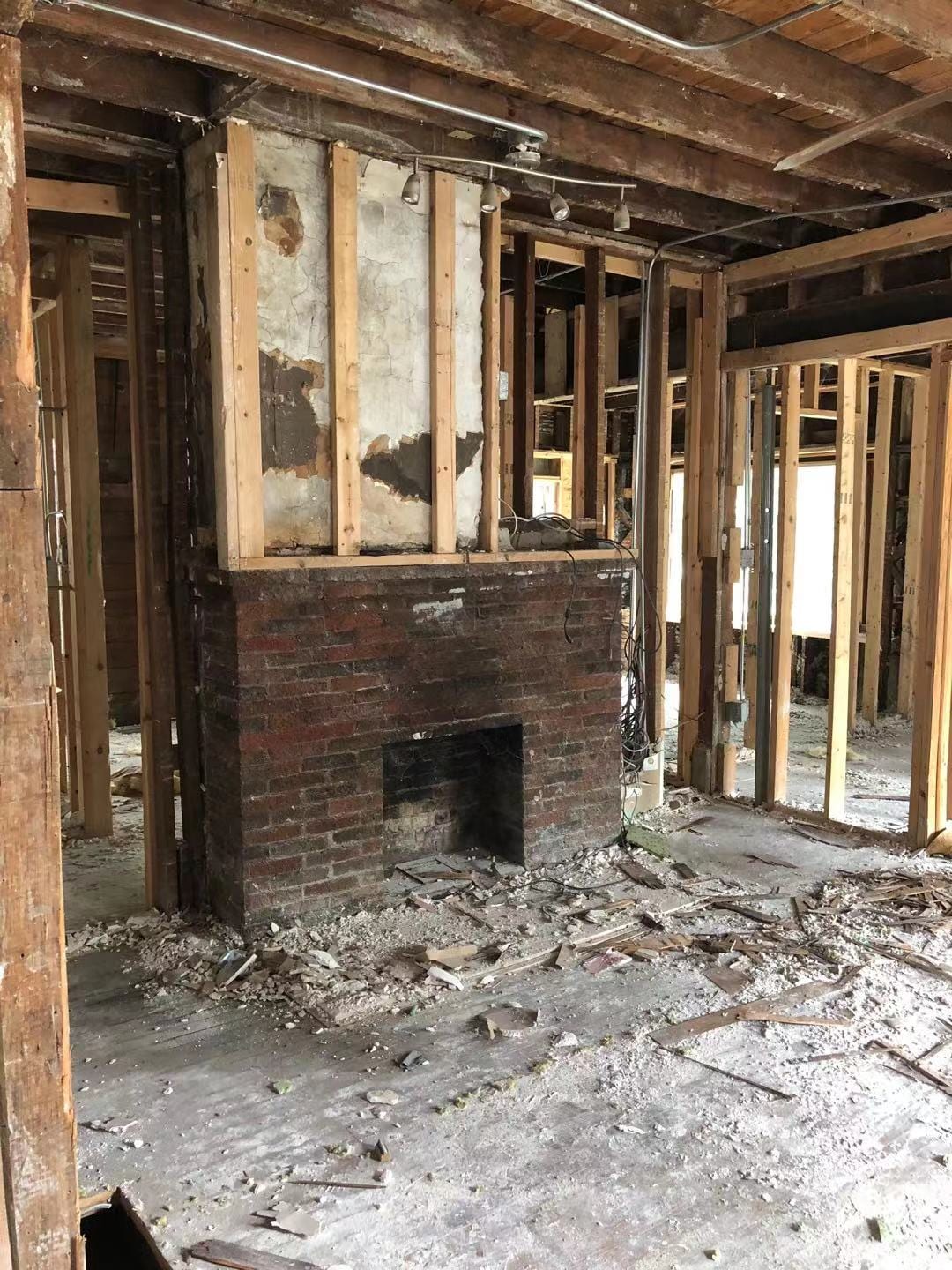
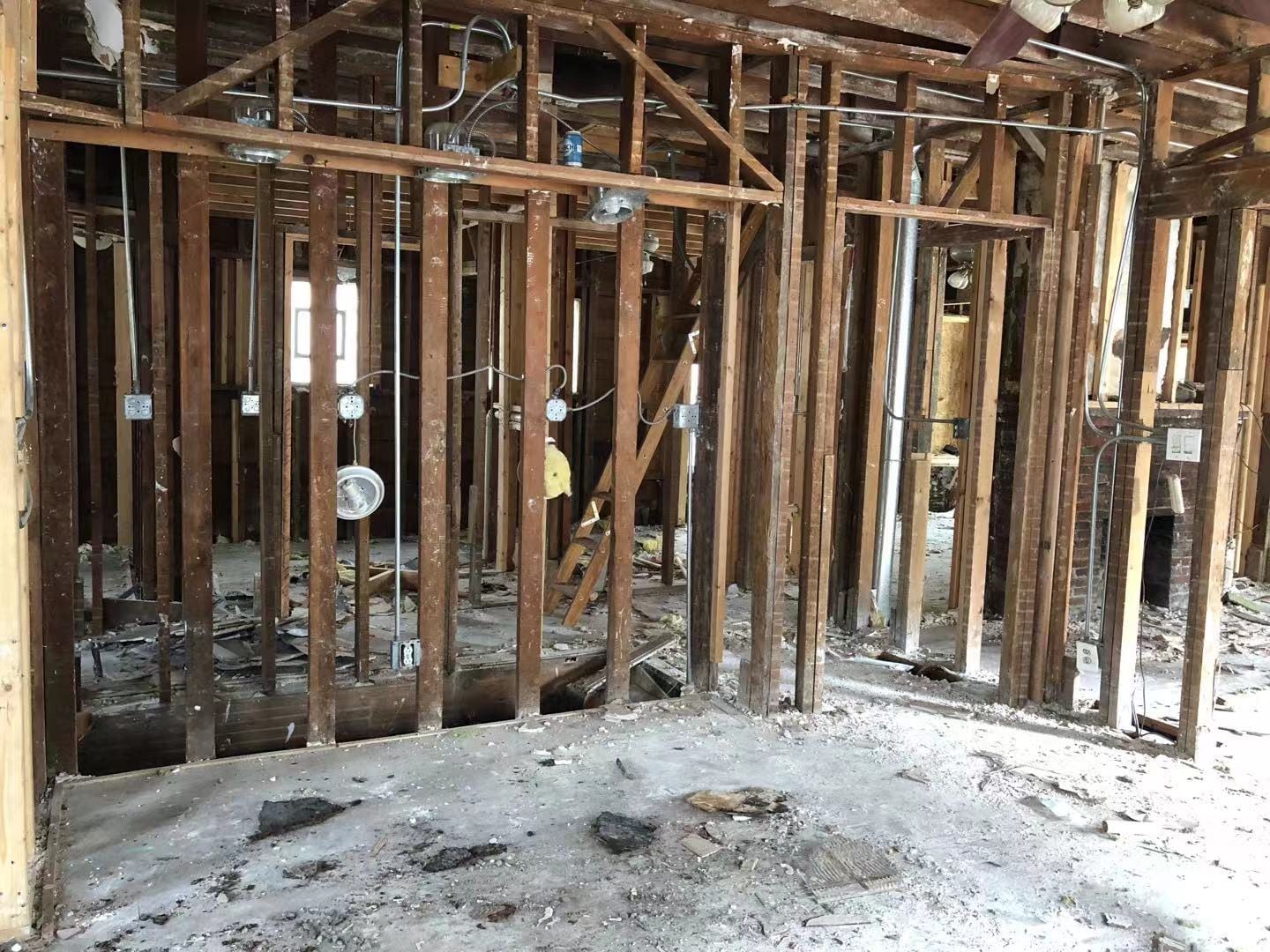
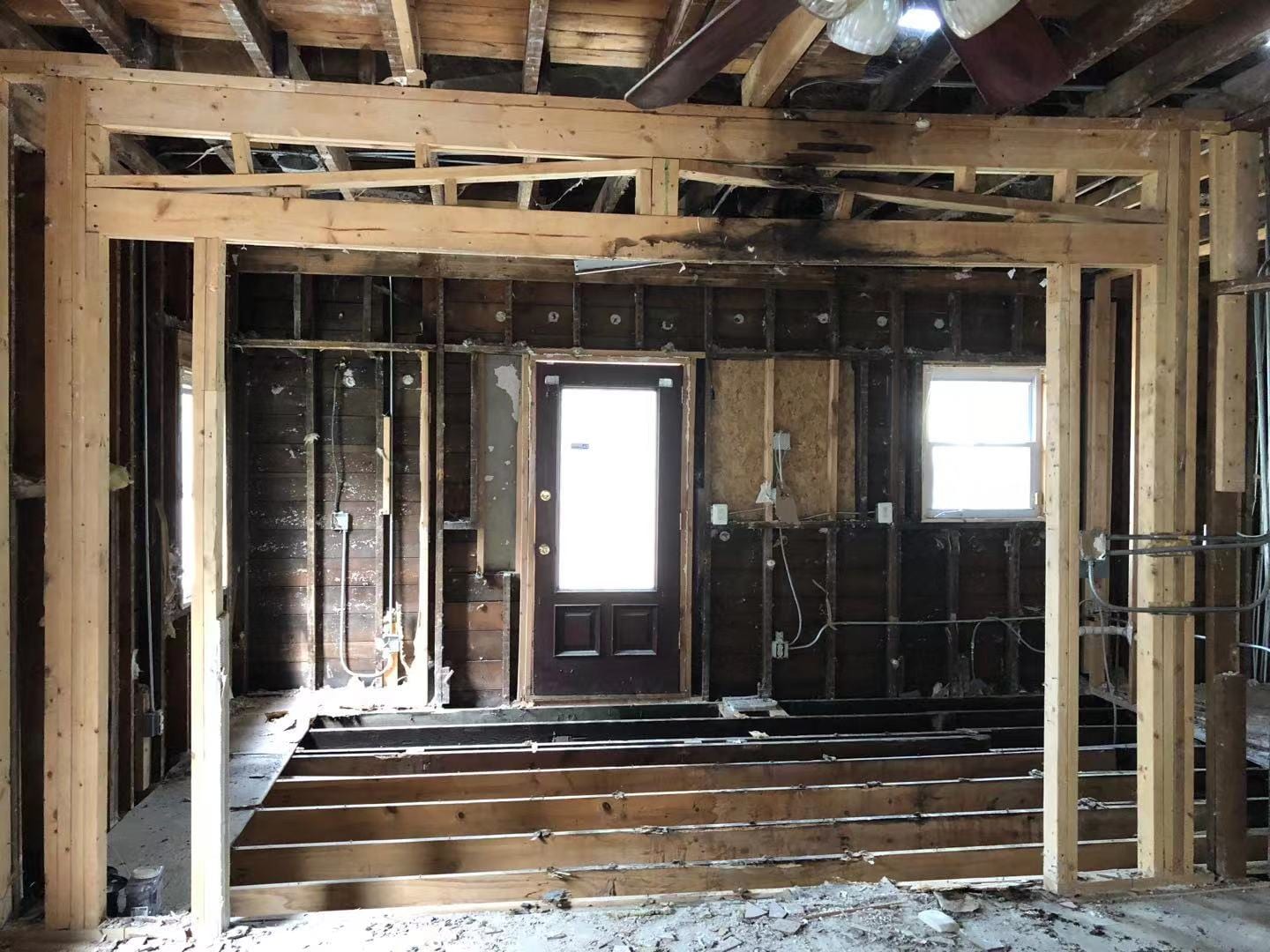
The 2020 gut rehab on a bank-owned Chicago-metro single-family was a 1,650 sqft single-story pre-1940 home with a 60-amp fuse panel and what looked like NM cable in the basement ceiling. The walkthrough budget was a partial rewire — kitchen plus two bathrooms — paired with a 100A → 200A service upgrade. $5K all-in was the line on the spreadsheet. Reasonable on paper.
The rough-in inspection caught knob-and-tube running through two bedroom walls and the attic feed behind the lath. The inspection turned the partial plan into a full-rewire conversation. The $5K partial budget became $14K actual — branch-circuit replacement throughout, arc-fault breakers on every bedroom and living-room circuit per NEC 210.12, plus fish-and-patch labor through finished plaster. Drywall and paint touch-up downstream added another $1.8K because we couldn't walk away from the patches we'd created.
The discipline I'd wire into any pre-1980 budget after that: assume full rewire on anything older than 1950, assume partial-with-some-panel-side-cascade on 1950-1975 stock, and only quote panel-only-swap on homes where an electrician has already checked a device box or an accessible attic/basement run and confirmed the wiring as post-1980 NM cable. A 200-amp service upgrade without touching branch circuits is its own scope with its own cost band — one of the four modes in the scope-mode table earlier in this guide. The cost of being wrong on the partial scope is much higher than the cost of being wrong on the full scope.
What's usually NOT in the electrician's number
Rewire quotes are usually for the electrical work itself — the labor and materials inside the electrician's scope. A handful of real downstream costs almost always fall outside that line. Ask which side of the line each one sits on before you sign.
- Drywall or plaster patch. Fishing through finished walls leaves cuts. Patch and skim coat is usually a different trade and a separate line.
- Paint.Even a clean patch needs the wall it's on repainted. Match coats often spread a couple of walls further than that.
- Fixture upgrades beyond the allowance. Receptacles, switches, smart dimmers, USB outlets, light fixtures. A baseline allowance is in most quotes; upgrades land on you.
- Utility disconnect and reconnect. Service-side work usually involves a separate utility fee. Calendar windows can also push your project a week.
- Permit reinspection. If the first rough-in fails, reinspection fees can land on you depending on the contract. Read the line that covers that.
- Temporary power, hotel nights, lost workdays. Whole-house rewires usually involve no-power windows. If you live in the house, plan for it.
The utility and permit calendar (200A service upgrades)
For a 200A service upgrade specifically, the electrician's labor is usually 1-2 days. The calendar window on the project is almost always longer — sometimes much longer — because two parties outside the electrician's control set the pace: the utility (disconnect and reconnect) and the building department (permit and inspection).
- Step 1QuoteWalk the meter side with the electrician
- Step 2PermitDays to weeks; longer in strict jurisdictions
- Step 3Utility disconnectScheduled on the utility's calendar
- Step 4Electrician workTypically 1-2 days of labor
- Step 5InspectionSometimes a re-look on grounding
- Step 6Utility reconnectPower back on after sign-off
A clean Chicago-metro jurisdiction is commonly 1-3 weeks of permit-and-inspection calendar time. Stricter jurisdictions with structural-reviewer requirements can push that to 5-10 weeks. If you're mid-rehab and downstream work depends on power, slot the upgrade after demo and before drywall close — that's usually the cheapest window to lose a few days of power.
When to call this a full rewire before bidding
Some house conditions push the conversation toward a full rewire before the first quote arrives. Surfacing them up front is cheaper than discovering them at rough-in.
- Knob-and-tube wiring (mostly pre-1950). Knob-and-tube may require full replacement, especially once walls are being opened or when a homeowner's insurer or local inspector asks for copper end-to-end. Leaving live knob-and-tube behind unopened walls is a common reason rough-in inspections get pulled.
- Aluminum branch wiring (1965-1973). Aluminum branch may be repairable using CPSC-recognized connection upgrades. COPALUM crimps require an authorized installer and a restricted crimp tool — the wait for a trained installer is 4-8 weeks in many markets. AlumiConn connectors can be installed by a licensed electrician familiar with the connector listing and the torque spec, with no restricted tool required. Quote copper replacement if local acceptance of either repair path is uncertain.
- 60A panels and old fuse-era panels. These often get paired with panel and service work. The branch wiring behind them still needs verification — old service often signals old branch.
- Large renovation across bedrooms, living, dining, or kitchen1. NEC 210.12 calls for arc-fault breakers on circuits serving those rooms when work crosses the substantial-renovation threshold. On a pre-1980 home, that can widen a partial-rewire scope onto circuits outside the renovated rooms. Surface it before bidding so the quote reflects it.
Frequently asked
How much does it cost to rewire a house in 2026?
A whole-house rewire usually runs about $7,000-$18,000 on a 1,500-2,500 sqft home. Smaller jobs — a panel swap or a single-room partial rewire — can start near $1,500-$3,000. The drivers are square footage, wiring era, whether the panel or service entrance is touched, and how much patching the finished walls will need. The per-square-foot shortcut ($2-4/sqft on open studs, $6-10/sqft on lath-and-plaster) is a sanity check, not a bid.
What's the difference between a full rewire and a partial rewire?
A full rewire replaces all branch circuits, the panel, and usually the service entrance, and brings outlets, breakers, and bonding to current code. A partial rewire touches specific rooms — kitchen, basement, an addition — and leaves the rest of the wiring in place. The cost gap is roughly 3-5×. The trap: substantial work in bedrooms, living, dining, or kitchens can require arc-fault breakers on the rest of the circuits serving those rooms (NEC 210.12), so a 'kitchen only' rewire sometimes ends up touching the panel side anyway.
When does a house actually need rewiring?
Three common triggers, roughly in order of urgency: • Knob-and-tube wiring (mostly pre-1950 homes): ungrounded, deteriorating cloth insulation, often a problem for homeowner's insurance. • Aluminum branch wiring (1965-1973): the connection points at outlets and switches are the fire-risk surface, not the wire itself. • 60A panels and old fuse boxes that can't carry modern loads. Two-prong outlets mean ungrounded wiring, which usually means GFCI replacements wherever water is nearby — kitchen, bath, laundry, garage, outdoor. Frequent breaker trips, scorched outlets, or a burning-plastic smell are call-now signs at any age.
How do you rewire a house?
For almost every homeowner, the safe answer is: call a licensed electrician. A house rewire means opening walls, working around service equipment, sizing circuits, meeting local code, and passing inspection. The normal process is: document the existing panel and wiring era, decide full vs partial scope with the electrician, pull the electrical permit, open access where needed, let the electrician rough in new circuits, pass rough inspection before walls close, then finish devices, test GFCI/AFCI protection, label the panel, and pass final inspection. Do not open live panels or work on energized circuits.
How long does it take to rewire a house?
Working days: about 5-10 for a full rewire on a 1,500-2,500 sqft home with normal access. Lath-and-plaster pre-1950 stock can stretch to 2-3 weeks because every wire is a fish-and-patch event. Calendar days are longer. Permit and inspection windows add 1-3 weeks in faster jurisdictions, and 5-10 weeks where structural review is required. Budget both numbers.
Can I rewire my house myself?
In many jurisdictions, an owner-occupant can pull a residential electrical permit on a primary residence. Pulling the permit is the easy part. Passing inspection — wire gauge, box fill, working space, AFCI/GFCI, grounding — is where DIY rewires usually fail. Homeowner's insurance carriers vary on whether they keep coverage active for owner-installed electrical work; ask before you start. For rentals and investor flips, most jurisdictions require a licensed electrician. If you want to learn, start with one circuit on a primary residence with an inspector check-in arranged up front. Don't open live panels or boxes.
100 amp vs 200 amp service — which one do I need?
200A is common in new construction and in homes carrying an EV charger, electric heat or range, hot tub, or finished basement with its own circuits. 100A is often fine on older homes running gas heat, gas range, and gas water heater with no high-amperage additions. The honest question is whether your largest combined load fits inside 100A using the NEC load calculation. If it doesn't, you're upgrading regardless of comfort.
What I'd do next
- Run the electrical calculator with your house flags
Pick the job type, enter wiring era, panel size, and what's open vs finished. Returns a planning band and flags what an inspection may push you toward.
- If aluminum wiring is present, compare repair vs replacement
Aluminum branch wiring has two valid paths — CPSC-recognized connection upgrades or full copper replacement. This helps you decide which one your house and insurer accept.
- If K&T is present, price replacement before opening walls
Knob-and-tube changes the math on partial rewires. Get the replacement cost before you commit to a scope.
Once the scope is locked, the next decision is whether the electrical line fits inside the larger rehab budget — and whether the timeline works with your construction loan or your living arrangement. Run the gut-rehab and timeline calcs alongside this one for the full picture.
- 1. NFPA 70 — National Electrical Code §210.12 (arc-fault protection on substantial renovation) — anchor for arc-fault breaker requirement on bedroom, living room, dining room, and kitchen circuits when work crosses the substantial-renovation threshold. Local jurisdictions adopt with varying amendments. ↩
By James Wu. Cost ranges are SiteworkMath planning ranges informed by Fixr 2026, Inch Calculator 2026, Homewyse 2026, and Nassau National Cable 2024 cross-checked against manufacturer panel and breaker spec sheets (Square D, Eaton, GE, Siemens, Leviton). Code references are NEC / NFPA 70 §210.12 (arc-fault), §210.8 (GFCI), §230 (service entrance), §250 (grounding), §408 (panels), §314 (box fill), and §110.26 (working space). Real-flip operator note from a Chicago-metro 2020 gut rehab; cited by region only per the site's privacy convention. Not contractor-bid pricing — the budget I'd use to decide walk, bid, or kill before calling licensed electricians. Full methodology.