
If an inspection report flagged aluminum wiring, you're not staring down an automatic full rewire. Aluminum fails at the outlets and switches, not in the wire itself. Which repair will your insurer accept — AlumiConn, COPALUM, or full copper? That decides the cost.
First, verify what kind of aluminum you have
Two different things in a house can be aluminum, and only one of them is the historical concern. Aluminum branch wiring runs inside the walls and feeds outlets, switches, and lights — that is the 1965-1973 single-family stock that the CPSC has written repair guidance about1. Aluminum service-entrance cable, by contrast, brings power from the utility to the panel; modern homes still use it and it is not part of the same concern. If an inspector flagged “aluminum wiring” without specifying which, that is the first thing to settle.
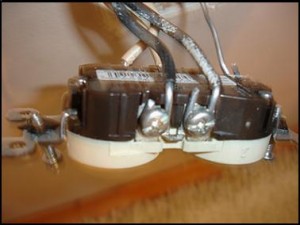
A 30-minute walkthrough by a licensed electrician is the right way to confirm. They will check the panel, pull a handful of outlet covers, and look for the “AL” stamp on the wire jacket. That is also the moment to ask whether the wiring is consistent throughout — some transition-era homes mixed aluminum and copper, and a single look at the panel can miss it.
The decision, before you call electricians
Most aluminum-wiring decisions follow the same fork. Start at the top and stop at whichever step changes the answer.
Inspector flagged aluminum.
Confirm whether it is aluminum branch wiring, or only an aluminum service-entrance cable.
Any urgent symptoms?
Warm outlets, scorch marks, buzzing, burning smell, or repeated breaker trips. If yes, stop using those circuits and call a licensed electrician today — see the symptoms list below.
Pick a repair path on paper.
AlumiConn, COPALUM, or full copper rewire. Generic wire-nut pigtailing is not on the list.
Confirm the path in writing with insurer and lender.
Different carriers accept different paths. The cheaper repair only saves money if your insurer and lender will sign on it.
Repair, full rewire, or walk from the deal.
If the accepted method and the timeline do not fit your budget, walking is a valid third option.
The three repair paths — and one that is not a repair
- AlumiConn.A tin-plated connector block that holds the aluminum wire and a short copper pigtail in separate ports. It does not require the restricted COPALUM tool — a licensed electrician familiar with AlumiConn can install it, following the connector's listing and torque spec and the local inspection rules. Recognized alongside COPALUM in the CPSC's repair guidance, and the common path when waiting weeks for a specialist would push the project past its deadline.
- COPALUM. A one-time hydraulic crimp that bonds the aluminum wire to a copper pigtail at every connection. The crimp tool and the training are restricted, so it requires a COPALUM-authorized installer. In most U.S. metros — Chicago included — the trained-installer pool is small and lead times of 4-8 weeks are common.
- Full copper rewire. Pulls the aluminum branch circuits and replaces them with copper end-to-end. The longest and most expensive path, but the cleanest on insurance and lender paperwork. The cost gap usually shrinks when walls are already open for other rehab work.
- What does NOT count as a repair:plain copper-to-aluminum pigtailing with standard wire nuts. It is cheap, it is fast, and it is not on the CPSC's recognized-repair list. Many insurers will not accept it either. If a contractor quotes “pigtailing” without naming AlumiConn or COPALUM in writing, ask which one they mean before signing anything. Standard CO/ALR receptacles are a related but separate item — they are safer at the device terminal, but they do not address the splice-point oxidation that is the actual concern.
What each path costs, and what to ask for in writing
These are planning ranges based on 2026 cost-guide aggregator data (AlumiConn and COPALUM per-home bands) and per-circuit copper replacement anchors (Homewyse, NM-B copper). Verify against a local electrician quote — and against your insurer's accepted-method list — before you lock the path.
| Path | Planning range | Best fit | Ask the electrician for… | Main limitation |
|---|---|---|---|---|
| AlumiConn | $1,500-$5,000 per home | Most occupied homes; no specialist available | Connector type named on the quote, photos at each box, permit + passing inspection | Not every insurer accepts it as standalone repair |
| COPALUM | $3,500-$8,000 per home | Homes where the insurer or lender wants COPALUM specifically | Installer's COPALUM authorization, written sign-off, and inspection | Trained-installer scarcity and 4-8 week lead times in most metros |
| Full copper rewire | $12,000-$20,000+ | Walls already open for other rehab; insurer requires full replacement; mixed or uncertain wiring where partial repair would leave doubt | Full scope on the quote, AFCI breaker plan, permit, and inspection sign-off | Highest dollar number; expect added breaker upgrades on bedrooms, living, dining, and kitchen |
If the panel or service amperage is changing in the same job, see the 200-amp service upgrade guide. If you are weighing repair versus a full house house rewiring cost, the rewire guide covers the four scope modes (full / partial / panel / service-upgrade) and how they price differently. You can also run the scope through the electrical rewire calculator to compare the three repair paths against a full copper rewire on your specific home.
Insurance, lender, and inspection paperwork
The repair method is partly an electrician decision and largely an insurance decision. Some insurers will write a policy on AlumiConn alone; some require COPALUM; some require full copper replacement. Lenders typically defer to the insurer on the path, but they want documentation in the file before closing. The right sequence is almost always: call two insurers and your lender BEFORE you commit to a repair method, get the accepted methods in writing, and then ask the electrician to quote that specific path.
When the repair is done, the documentation that travels with the house should include the electrician's written scope naming AlumiConn or COPALUM, photos of representative connections, a pulled permit, and a passing local inspection. That packet is what turns a repaired home into an insurable repaired home — and the difference between the cheaper repair and an unsellable one.
What to ask the electrician
A scannable call script. The goal is to make the repair method, the scope, and the paperwork concrete before any signature.
- Is this aluminum branch wiring, or only an aluminum service-entrance cable?
- Which repair method are you quoting — AlumiConn, COPALUM, or full copper rewire? Please name it on the written quote.
- Is every aluminum connection in the house included — outlets, switches, splice boxes, panel terminations?
- Will the quote include photos, a permit, and a passing inspection — and a written sign-off I can hand to my insurer?
- Have you confirmed my insurer or lender will accept this specific repair method?
- If the panel or service is being upgraded in the same scope, does that change what makes more sense — repair or full rewire?
- If walls are already open for other work, does a full copper rewire become the cheaper path overall?
When to stop and call today
The cost discussion assumes the house is stable. If any of these are happening, the budget conversation can wait — stop using the affected circuits at the breaker and call a licensed electrician today.
Urgent — call a licensed electrician
- Warm or hot outlet
- Scorch marks at a receptacle or switch
- Buzzing or sizzling from the wall
- Lights flicker or dim under load
- Burning-plastic smell
- Same breaker keeps tripping
How a Chicago-metro aluminum-house deal actually went
A 2018 walkthrough on a Chicago-metro 1968 single-family — small ranch, 1,400 sqft, otherwise solid bones — flagged dull silver-gray wire at the panel and at every receptacle behind the switch plates. Aluminum branch confirmed. The walked-through scope was AlumiConn at every connection (~30 boxes), quoted by a licensed electrician at $3,200 — solidly inside the AlumiConn band and a workable line on the spreadsheet.
The deal didn't pencil at AlumiConn. Two insurers we called would only write the policy on documented COPALUM or full copper rewire — AlumiConn wasn't accepted as a standalone repair. The COPALUM-trained installer pool in the Chicago metro was running a 6-week lead time; the closing had to happen in 4. Full copper rewire would have pushed the rehab budget about $14K higher than the deal could absorb. The honest call was to walk. The property would have penciled at AlumiConn, but the insurance constraint made the cheaper path unavailable on that specific deal. Discipline I'd wire into any aluminum-house purchase now: call two insurers BEFORE the offer, get the accepted-repair list in writing, then back-solve the rehab budget against the constraint. The repair path isn't a contractor decision — it's an insurance decision that runs through the contractor.
Where the budget tips
The four common ways the planning range stops being the real range:
- Connection count. AlumiConn and COPALUM scale with the number of receptacles, switches, and splice boxes on aluminum — typically 25-50 in a single-family. Smaller homes land at the low end of the per-home band; larger homes with finished basements and island kitchens land at the top.
- Specialist scarcity for COPALUM. The premium over AlumiConn is mostly the trained-installer shortage, not the materials. Lead times of 4-8 weeks are common in mid-size and larger metros, and longer in rural areas. Book early or accept that the deal calendar may decide the method for you.
- Full rewire pulls in breaker upgrades. A full copper rewire on a pre-1980 home generally triggers added arc-fault breakers on every bedroom, living, dining, and kitchen circuit — roughly $400-$800 extra in materials on top of the rewire range. Repair methods do not trigger that step.
- Paperwork the connector quote rarely includes. A passing inspection, sign-off documentation for the insurer, and sometimes a separate permit can add $200-$500 to the connector quote. It is the difference between a repaired home and an insurable repaired home — ask for it in writing up front, not after the work is done.
Frequently asked
How much does it cost to replace aluminum wiring with copper?
A full copper rewire on an aluminum-branch home typically lands in the $12,000-$20,000+ range, based on 2026 cost-guide data, and varies with home size, wall access, and whether the panel and service are touched in the same scope. Most homeowners do not have to go that far. Two repair paths recognized in CPSC repair guidance use the existing aluminum wire and add a copper pigtail at every connection: AlumiConn usually $1,500-$5,000 per home and COPALUM usually $3,500-$8,000. Which one is right for your house depends on what your insurer or lender will accept in writing, how many connection points are in the home, and whether a COPALUM-trained installer is available locally.
Is aluminum wiring dangerous?
Aluminum branch wiring installed in the late 1960s through early 1970s has a documented fire-risk history, but the wire itself is not the problem. The risk is at every connection point — receptacles, switches, splice boxes — where aluminum oxidizes over time and the resistance can heat up the connection. The CPSC's repair guidance describes recognized fixes that address those connections instead of replacing the wire. Modern aluminum service-entrance and feeder cable is a different product and is not part of this concern.
Can you fix aluminum wiring without rewiring the whole house?
Often, yes. Two methods recognized in the CPSC's aluminum-wiring repair guidance leave the aluminum wire in place and add a short copper pigtail at every connection: COPALUM, which uses a special crimp tool and a trained installer, and AlumiConn, a connector block that does not require the restricted COPALUM tool — a licensed electrician familiar with AlumiConn can install it. What is NOT considered a fix is plain copper-to-aluminum pigtailing with standard wire nuts — even if it is widely quoted. Standard CO/ALR receptacles and switches are safer at the device terminal, but installing them alone does not address the splice-point oxidation.
Does insurance cover aluminum wiring?
It varies by insurer, and it usually depends on whether the aluminum has been repaired and how. Many insurers will write a policy on a home that has documented full copper rewire, COPALUM, or AlumiConn. A smaller group will accept a properly documented pigtail repair done by a licensed electrician. Some will require full copper replacement regardless. The most important step is to call two insurers BEFORE you commit to a repair method, get the accepted repair list in writing, and pick the path that satisfies the insurer your lender requires.
What is COPALUM crimping?
COPALUM is a permanent crimp connector that bonds a copper pigtail to the existing aluminum wire at every connection point. The crimp is not a screw or a wire nut — it is a one-time hydraulic tool press that creates a sealed metallurgical joint. It is one of the repair methods recognized in the CPSC's aluminum-wiring guidance. The tradeoff is that the tool and the training are restricted, and in many markets the wait for a COPALUM-trained installer is 4-8 weeks. That is why AlumiConn, which does not require the restricted COPALUM tool, has become the more common path on practical timelines.
How do I know if my house has aluminum branch wiring?
Three cues, in order of reliability. (1) Build year: homes built roughly 1965-1973 are the higher-probability window. (2) A licensed electrician can confirm in a short walkthrough — usually under $200 in Chicago-metro markets — by checking the panel and a few outlets. (3) Aluminum branch wire looks dull silvery rather than reddish, and the jacket is usually stamped “AL” or “ALUMINUM” at intervals. Do not pull live receptacle covers yourself to inspect — that is exactly the kind of check an electrician should do.
What I'd do next
- Compare the three repair paths on your home
Plug in the home size and the aluminum flag — the calculator shows AlumiConn, COPALUM, and full copper rewire side by side with the added breaker work where it applies.
- Read the house rewiring cost guide
If you might end up at full rewire — because of insurance, partial-aluminum surprises, or other work already underway — the rewire guide covers full versus partial scope.
- Add a 200-amp service upgrade if the panel is in scope
When aluminum repair overlaps with a panel or service upgrade, the combined scope often changes the cheaper path.
The work itself belongs to a licensed electrician, and the repair method belongs to the insurer and lender as much as it does to the contractor. Settle the paperwork first, and the budget number stops being a guess.
- 1. CPSC Publication 516 — Repairing Aluminum Wiring — the federal repair guidance for 1965-1973 aluminum branch wiring, including the AlumiConn and COPALUM repair paths. ↩
By James Wu. Cost bands are SiteworkMath planning ranges informed by CPSC Publication 516, Repairing Aluminum Wiring (federal repair guidance), Homewyse 2026 (per-circuit copper-replacement anchor), Plumbline Services (AlumiConn vs COPALUM technical breakdown), and aggregated insurance-treatment summaries from Augustyniak Insurance, NREIG, and REInsurePro. Code references behind the AFCI breaker note are NEC / NFPA 70 §110.14 (termination requirements) and §210.12 (arc-fault breaker requirements on substantial residential renovation). Field example from a 2018 Chicago-metro walked deal, cited by region only per the site's privacy convention. These are planning ranges to help decide whether to repair, rewire, or walk — not contractor-bid pricing. Full methodology.