
If an inspection report flagged knob-and-tube, breathe before you price the rewire. There are six different situations K&T can mean in a house. Each one has a different cost.
The four K&T situations are not the same
Replacement cost guides usually answer one question — what does it cost to rewire a K&T home? — and skip the upstream question of whether you should. These four situations point at different decisions before any electrician walks the property.
Abandoned K&T visible in attic or basement
- What it means
- The old runs were de-energized and left in place. They are not carrying power, but the disclosure still names them.
- Who cares
- Buyers, home inspectors, and some insurers. Renovation inspectors usually do not.
- Next step
- Have a licensed electrician confirm the runs are dead and document it. Some insurers will close the file at that point; others will still ask for removal.
- What to ask
- “Can you put in writing that these runs are de-energized — and would your insurer accept that letter?”
Active K&T powering lights or outlets
- What it means
- K&T is still energized somewhere in the house — usually the older bedrooms, the dining room, or attic feeds to ceiling fixtures.
- Who cares
- Insurers (this is the version most likely to be conditioned or declined), lenders on some loan programs, and renovation inspectors when walls open.
- Next step
- Get two electrician walkthroughs and at least two insurance quotes. Then decide whether to replace, document, or walk.
- What to ask
- “How much of this house is on K&T, and what does a full-replacement scope cost versus only what is reachable through open framing?”
Active K&T under attic insulation
- What it means
- Active runs covered by blown-in cellulose or fiberglass batts. The code rule against insulation contact is the part most older attics quietly fail.
- Who cares
- Energy auditors, weatherization programs, and any insurer that does an attic inspection. Also you, when summer cooling loads spike.
- Next step
- Choose one of two paths — pull the insulation off the K&T and keep it derated, or remove the K&T and reinsulate the attic properly.
- What to ask
- “Is it cheaper here to replace the K&T attic feeds and re-insulate, or to box and bypass the K&T and leave it derated?”
K&T discovered during renovation
- What it means
- Walls were opened for a remodel, and K&T turned up behind the lath or in the joist bays. The plan written before demo no longer fits.
- Who cares
- The renovation inspector, the GC, the homeowner. Insurance is downstream of whatever scope ends up on the permit.
- Next step
- Stop, pull the electrician back in, and have the inspector walk the framing before drywall is ordered. Rewriting the scope is cheaper than closing it up and re-opening it.
- What to ask
- “Given what is now visible in these cavities, does the existing permit cover the actual scope — or do I need to re-pull?”
Why replacement cost gets expensive
The wire is rarely the line that breaks the budget. The expensive part of a K&T replacement is reaching the wire through finished walls — and then putting those walls back together. On a 1,500-2,500 sqft pre-1950 home, the plaster patching and the repaint can rival the electrician's line on the invoice. For the broader open-walls-versus-finished-walls cost picture, the whole-house rewire breakdown walks the four scope modes; this page focuses on what is specific to knob-and-tube.
| Line item | Why it exists | Typical range | Ask before signing |
|---|---|---|---|
| Branch-circuit replacement | Pulling the new copper and removing the K&T from outlet to outlet. | $6-$10 per linear foot on most pre-1950 stock. | Are you fishing through plaster or working open? The per-foot rate should reflect that. |
| Plaster or drywall patching | Every fish-through and every box cut leaves a hole. Plaster does not patch back like drywall. | $300-$900 per affected surface; the total often rivals the wire line. | Is the patch crew yours, mine, or a separate trade? When do they show up after the electrician finishes? |
| Panel and breakers | Older houses on K&T often run 60A or 100A fuse boxes that cannot carry the new load. | $500-$2,000 for a 100A panel; $1,800-$4,500 for a 200A upgrade. | Is the service entrance and meter being touched, or only the panel inside? |
| AFCI and GFCI breakers | Code adds arc-fault breakers on the rest of the bedroom and living-area circuits when the work is substantial. | $50-$100 per AFCI; $5-$100 per GFCI breaker. | Which rooms count as 'substantial renovation' on this permit? Which breakers are in the quote? |
| Outlets, switches, and boxes | K&T predates modern junction-box requirements. Most boxes are replaced as the wire goes in. | $100-$150 per box installed; about $200 per receptacle on average. | Are you counting every box in the house or only the ones that come out easily? |
| Paint and finish work | Patches stand out under sidelight unless the wall is repainted to a corner. | $2-$4 per square foot for affected rooms. | Are we repainting wall-to-corner or only patch-blending? |
The reason pre-1950 K&T houses can cross $40,000 isn't a spool of copper. It is the labor to fish replacement runs through finished plaster, plus the patch and paint that follow. If your house is balloon-framed lath-and-plaster with full plaster ceilings, budget the wall-repair line as a near-certainty, not a contingency.
Insurance and closing — the paperwork path
The K&T part of a deal usually decides itself in the insurer and lender conversation, not the electrician quote.
- Insurance varies.Many standard carriers decline new policies on homes with active K&T. Some will write with conditions — a surcharge, an inspection requirement, or a remediation deadline. A smaller specialty market may keep coverage at a higher premium. Call two carriers before you commit to a scope; their answers usually do not match.
- Lender programs vary too.FHA, VA, and conventional underwriting treat K&T differently and can change from year to year. Some require remediation before closing; some accept documentation; some defer to the insurer. Confirm in writing what your lender will accept on this specific property before you price the work.
- The renovation inspection is its own gate. Discovering K&T inside opened walls is one of the more common scope shifts on a pre-1950 remodel — local rules and inspector judgment vary, and the conversation often ends with more replacement than the plan called for.
- Documentation does most of the work.The packet that travels with the house — electrician's letter, permit, inspection sign-off, photos — is what turns a K&T home into a documented-replacement home. That is the version insurers and lenders are more likely to review as a completed replacement, though acceptance still varies by carrier, lender, and loan program.
Documents to collect
- Licensed electrician's written scope, naming K&T replacement
- Pulled permit, with the local building department on the line item
- Passing rough-in and final inspection sign-off
- Photos at the panel and at representative boxes, before and after
- Final invoice, with the K&T removal called out
- If applicable, a separate letter for the insurer naming the runs replaced
Ask the electrician to assemble this packet at the end of the job, not six months later when you are switching carriers. It is the file your future insurer will read.
How a Chicago-metro K&T job actually went
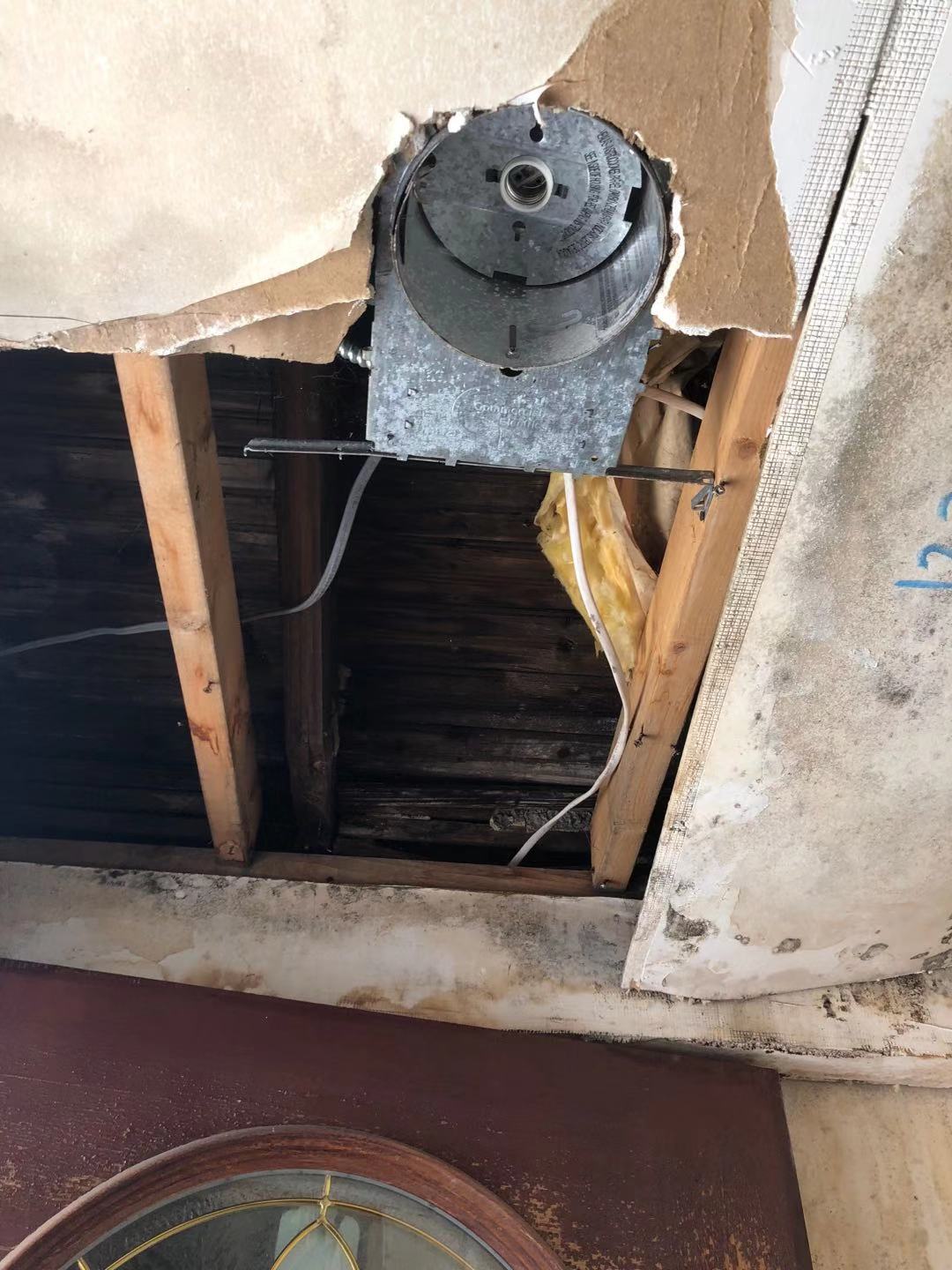
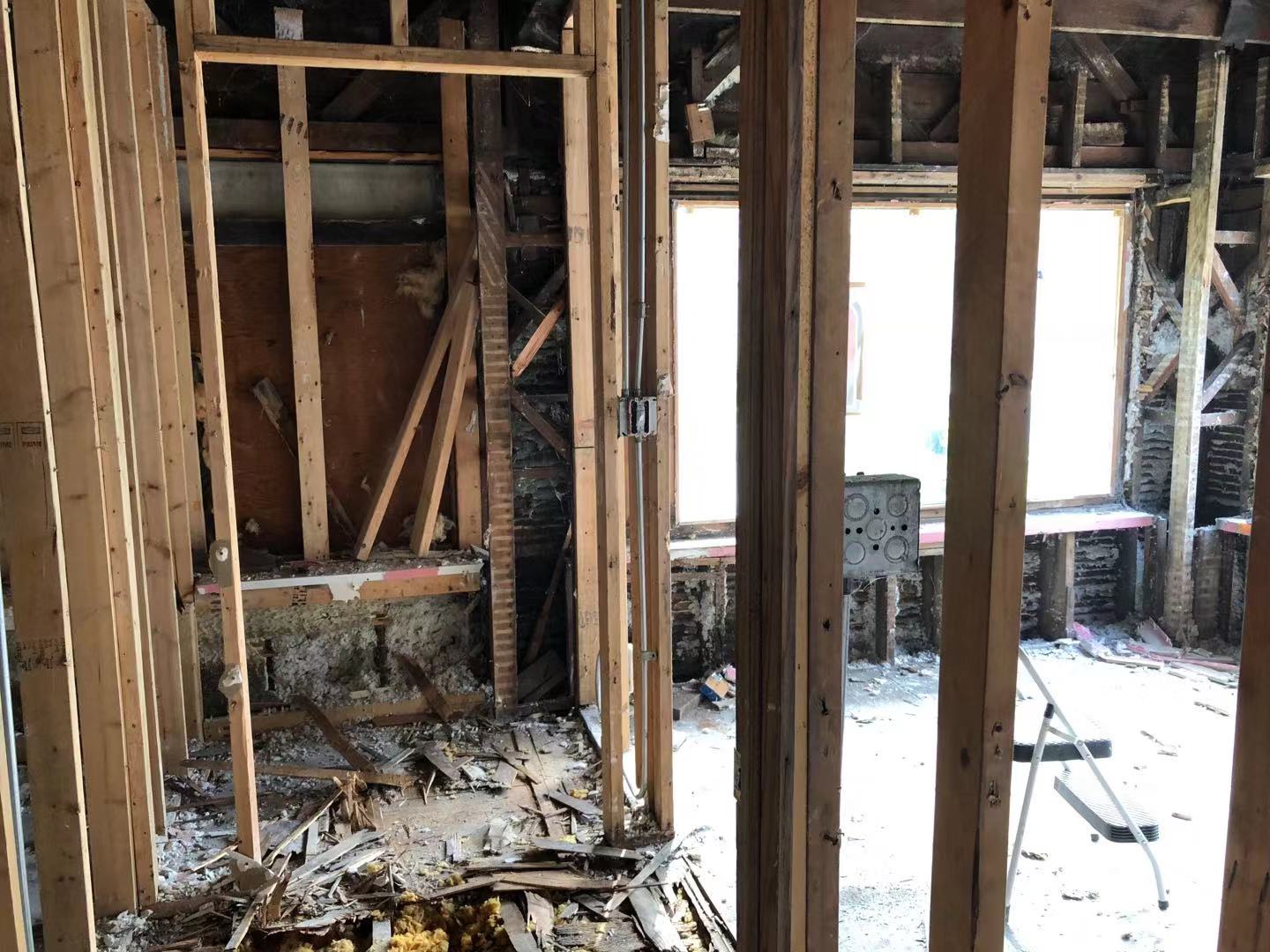
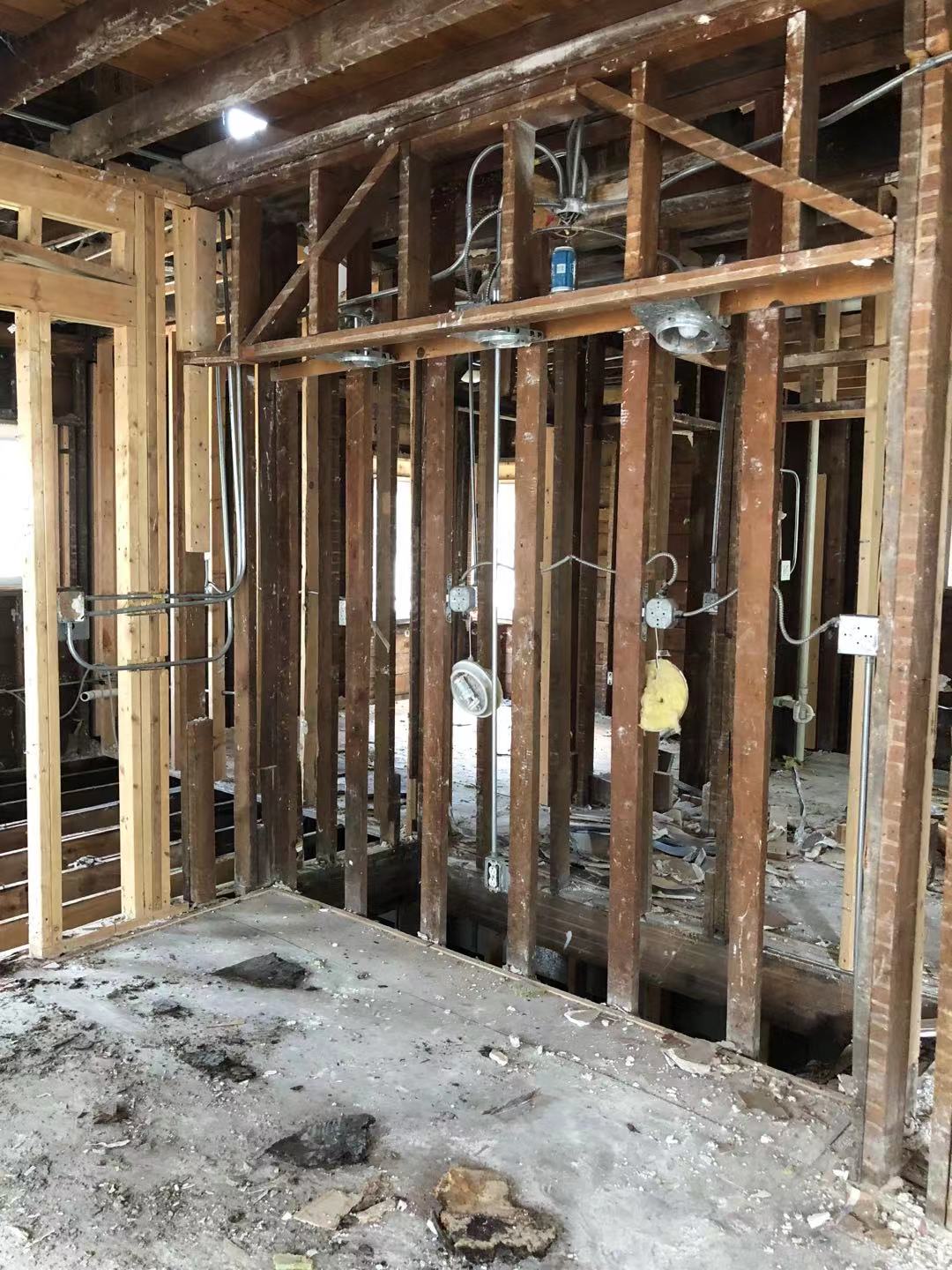
A pre-1940 single-story walkthrough in the Chicago suburbs, 1,650 sqft, lath-and-plaster throughout. The partial-rewire plan was modest on paper — kitchen, two baths, and a 200A panel and service upgrade. The walls in those rooms were already coming open for the remodel, so the partial scope made sense on the day the budget was written.
Once the kitchen ceiling came down, the rough-in walk turned the plan into a different conversation. K&T ran through both bedrooms behind the lath and fed the dining-room ceiling fixture from the attic. The local inspector and the electrician both wanted the full house on the permit before drywall closed, given how much of the K&T was now visible in opened framing. The scope grew.
The branch-circuit line moved from a kitchen-and-bath number to a whole-house fish-and-patch. The added AFCI breakers covered the bedrooms and the dining and living rooms. The receptacle and box count roughly tripled. The electrical line landed around $14K against the $5K the spreadsheet had. The drywall and paint downstream — patches across the bedroom walls, the entry hall, and the dining-room ceiling where the attic feed came out — added another $1.8K that sat outside the electrician's quote even though the electrical work caused it.
The discipline I'd wire into any pre-1950 budget now: when K&T is on the inspection report, assume the visible runs are not the whole story, and budget the patch and paint downstream as part of the electrical line, not a separate trade you can sort out later.
What partial replacement can and cannot solve
Partial K&T replacement is a real option in some homes — usually when the active runs are clustered in one part of the house and the rest is already on modern wiring. Where it tends to fall short is the paperwork side.
- It can solve a localized renovation problem.If the remodel only opens one room and the K&T in that room can be replaced cleanly, a partial scope may pass the local rough-in inspection on its own.
- It usually does not solve insurance.If active K&T remains anywhere in the house, the disclosure still names it. Many insurers treat “some K&T remaining” the same as “K&T present” on the application.
- It rarely solves attic insulation.The §394 insulation-contact rule applies to the K&T that is still active in the attic, not to the runs that were replaced downstairs. If the goal is an insulation upgrade, the attic feeds usually have to come out.
- It does not always survive the next walk-through. On a renovation that opens more walls than the original plan, the inspector or the electrician often pulls in the rest of the K&T before drywall closes. Plan the contingency for that outcome.
- Plain pigtailing is not a fix.Connecting modern copper to K&T at a receptacle and leaving the rest of the run in the wall does not address the splice-point heat or the insulation-contact rule, and most insurers read it the same as leaving the K&T in place.
Frequently asked
How much does it cost to replace knob and tube wiring in 2026?
Plan on roughly $12,000-$36,000 for a whole-house replacement on a typical pre-1950 home, with the high end climbing past $40,000 once the plaster repair and repainting are added back in. What moves the number is rarely the wire itself. • Wall finish — open studs run a fraction of the cost of finished lath and plaster. • Home size and how many circuits actually run on K&T. • Whether the panel or service is upgraded in the same scope. • Patch, prime, and paint after the electrician leaves.
Can you insure a house with knob and tube wiring?
Sometimes, but the path is narrower than it used to be. Many standard insurers decline new policies on homes with active K&T. Some carriers will write or renew with conditions — a higher premium, an inspection requirement, or a remediation deadline. A smaller specialty market may keep a policy in place at a meaningfully higher cost. The cleanest way to widen the carrier pool is to document the K&T as removed: a licensed electrician's letter, a pulled permit, the passing inspection, and photos that show what was replaced.
Can you partially replace knob and tube wiring?
Technically, in some homes, a small repair is possible. Where partial replacement stops being useful is the paperwork. If active K&T remains in the walls or attic, the disclosure to an insurer or buyer usually still reads as a K&T home. A renovation inspection in opened walls often turns a partial scope into a full-replacement conversation once the framing is exposed. It is worth asking the insurer and the local inspector what they will accept in writing before pricing a partial job.
Will a home inspection fail with knob and tube wiring?
A pre-purchase home inspection rarely fails outright over K&T, but it almost always flags it as a material item that lenders and insurers read. FHA, VA, and conventional underwriting policies on K&T vary by program and lender. Some require remediation before closing, some accept documentation, and some defer to the insurer. A renovation inspection inside opened walls is a different gate — local codes and inspector judgment vary, and K&T found in the cavity often pushes the scope toward replacement before drywall closes.
Is knob and tube wiring safe?
K&T was the standard wiring method when many pre-1950 homes were built, and the National Electrical Code still permits it in limited concealed applications under §394. The risks are real but specific. • It has no ground wire, so any modern grounded appliance plugs into an ungrounded circuit and outlets near water need GFCI protection. • The cloth and rubber insulation gets brittle with age. • Modern attic insulation cannot be packed against active K&T runs — that is the §394 contact rule, and it is what attic upgrades usually trip on. • Splice points and connections made before modern junction-box rules can run hot under today's loads. None of that is a reason to open a box yourself — call a licensed electrician.
How much does it cost to remove knob and tube wiring?
Removal is almost always bundled into a rewire — the electrician pulls the old runs while fishing the new ones, and the labor overlaps. If you are quoted a remove-only line on a home that still has live K&T, ask why the new circuits are not in the same scope. Standalone removal on abandoned, de-energized K&T is sometimes priced separately when an attic insulation upgrade or finish work is the trigger.
What I'd do next
- Run a rewire estimate with K&T selected
Plug in the home size, wall finish, and whether the panel or service is in scope. The calc surfaces the plaster patch and the AFCI breaker count most quotes leave out.
- Compare whole-house rewire cost
If the K&T conversation has already moved toward replacement, the rewire guide walks the open-walls-versus-finished-walls cost picture in detail.
- If the panel or service also needs work, read the 200A guide
Many K&T homes still run a 60A or 100A panel. The service-upgrade guide covers the utility calendar and permit gates separate from the K&T scope.
- If the house also has aluminum branch wiring
Some pre-1980 homes mix K&T in the older sections with 1965-1973 aluminum branch in additions. The aluminum guide covers the repair-versus-rewire fork.
- Put the electrical line into a gut-rehab budget
If the K&T fix is part of a larger pre-1950 rehab, the gut-rehab calc treats electrical as one of fourteen lines and stress-tests the whole budget.
- Add the rewire to the project timeline
Permit windows, inspection waits, and insurance documentation can add weeks the original timeline never accounted for. The timeline calc plans for that.
Once the K&T scope is locked, the rest of the decision is calendar work — fitting the electrician, the patch crew, the inspection, and the insurance documentation into whatever closing or refinance window the deal is on. Plan the schedule around the paperwork, not just the trade.
- 1. NFPA 70 — National Electrical Code §394 (Concealed Knob-and-Tube Wiring) — the section that still permits K&T in limited concealed applications and rules out insulation contact. ↩
By James Wu. Per-line ranges are SiteworkMath planning numbers drawn from published 2026 cost guides — Inch Calculator 2026, Fixr 2026, HomeGuide 2026, and Nassau National Cable 2024 — alongside manufacturer panel and breaker specs (Square D, Eaton, GE, Siemens, Leviton). Code references are NFPA 70 §394 (K&T allowed uses and insulation-contact rule), §210.12 (AFCI on substantial renovation), §210.8 (GFCI), and §250 (grounding). The Chicago-metro example is a 2020 gut rehab the operator walked, cited by region only. Planning ranges, not contractor bids — the numbers I use to decide whether to walk a pre-1950 acquisition before calling licensed electricians and insurers. Full methodology.